
2026-09-18 · David Crowe
How Hidden Water Travels Under Flooring and Behind Walls
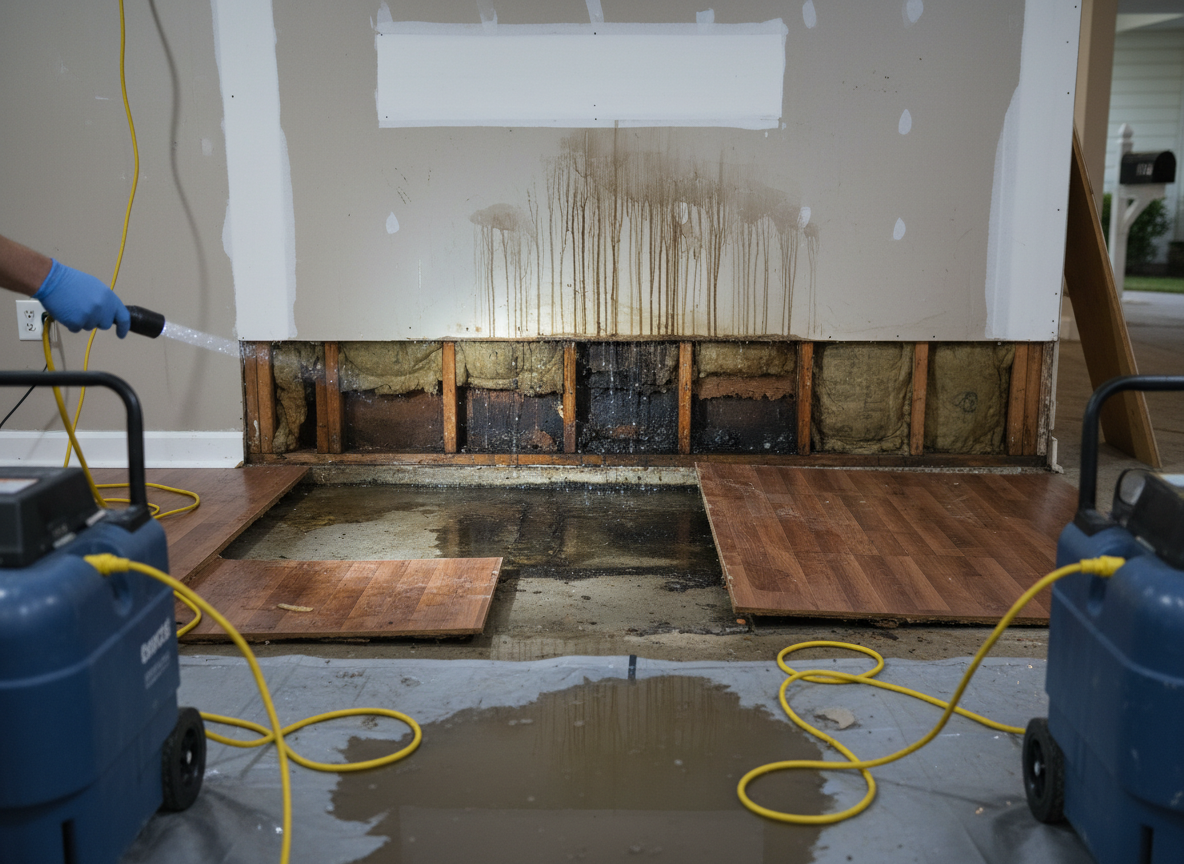
Hidden water travels under flooring through subfloor materials and behind walls via stud cavities and insulation, often moving 8–15 feet horizontally within the first 24 hours in Decatur's older homes due to gravity, pressure differentials, and capillary wicking in wood and drywall.
Flooring Pathways in Local Homes
In neighborhoods such as Old Decatur and Albany, many homes built before 1970 feature hardwood over plywood subfloors or slab-on-grade construction with thin underlayments. Water entering from a burst pipe or appliance leak seeps between boards and travels along the grain of the wood, following the path of least resistance toward lower points. In crawl space homes common around Point Mallard and Beltline, moisture rises from damp soil and wicks upward into floor joists, saturating insulation and creating hidden pockets that require targeted extraction equipment. This movement accelerates during hot summer months when humidity levels stay high, pulling additional moisture into the structure.
Residents in nearby Athens and Hartselle face similar issues when heavy rains push water under foundations, allowing it to migrate laterally under flooring for days before visible signs appear on the surface.
Wall Cavity Travel and Pressure Dynamics
Behind walls, water follows vertical studs and horizontal plumbing runs, driven downward by gravity while also spreading sideways through electrical openings and HVAC returns. In Decatur Morgan Hospital vicinity homes with plaster or drywall over lath, water can pool at the base plate and wick upward 4–6 feet via capillary action within porous materials. Mild winter temperatures allow slow evaporation that leaves salts and residue inside cavities, complicating later cleanup. Local operators know that once water reaches the bottom plate, it often exits through baseboards into adjacent rooms, especially in the compact layouts found in Riverbend and Austinville.
Extraction crews must open walls at multiple heights to break the capillary path rather than relying on surface drying alone.
Climate and Terrain Effects on Spread
Morgan County's humid subtropical conditions mean summer dew points often exceed 70 degrees, slowing natural drying and encouraging hidden water to remain liquid longer inside assemblies. Flash flooding from the Tennessee River corridor can force water under slabs in low-lying sections of Pointe Mallard Estates and Westmead, where it travels through utility trenches and emerges days later behind kitchen cabinets. Older housing stock lacks modern vapor barriers, allowing soil moisture to migrate continuously. Crews from the base at 133 4th Ave NE routinely map these routes using moisture meters because visual inspection alone misses water that has already traveled behind finished surfaces.
Practical Extraction Considerations
Effective removal requires addressing both the visible water and the hidden reservoirs that continue to feed mold growth. In practice, technicians isolate affected zones, remove baseboards, and drill weep holes at the bottom of walls to release trapped moisture before deploying air movers and dehumidifiers sized for the square footage. Linking to detailed guidance on hidden water damage after a leak helps homeowners understand when professional equipment is essential versus when surface fans suffice. Similar patterns appear after heavy rain and flash flooding in Decatur, where water follows the same hidden routes but originates from exterior sources rather than interior leaks.