
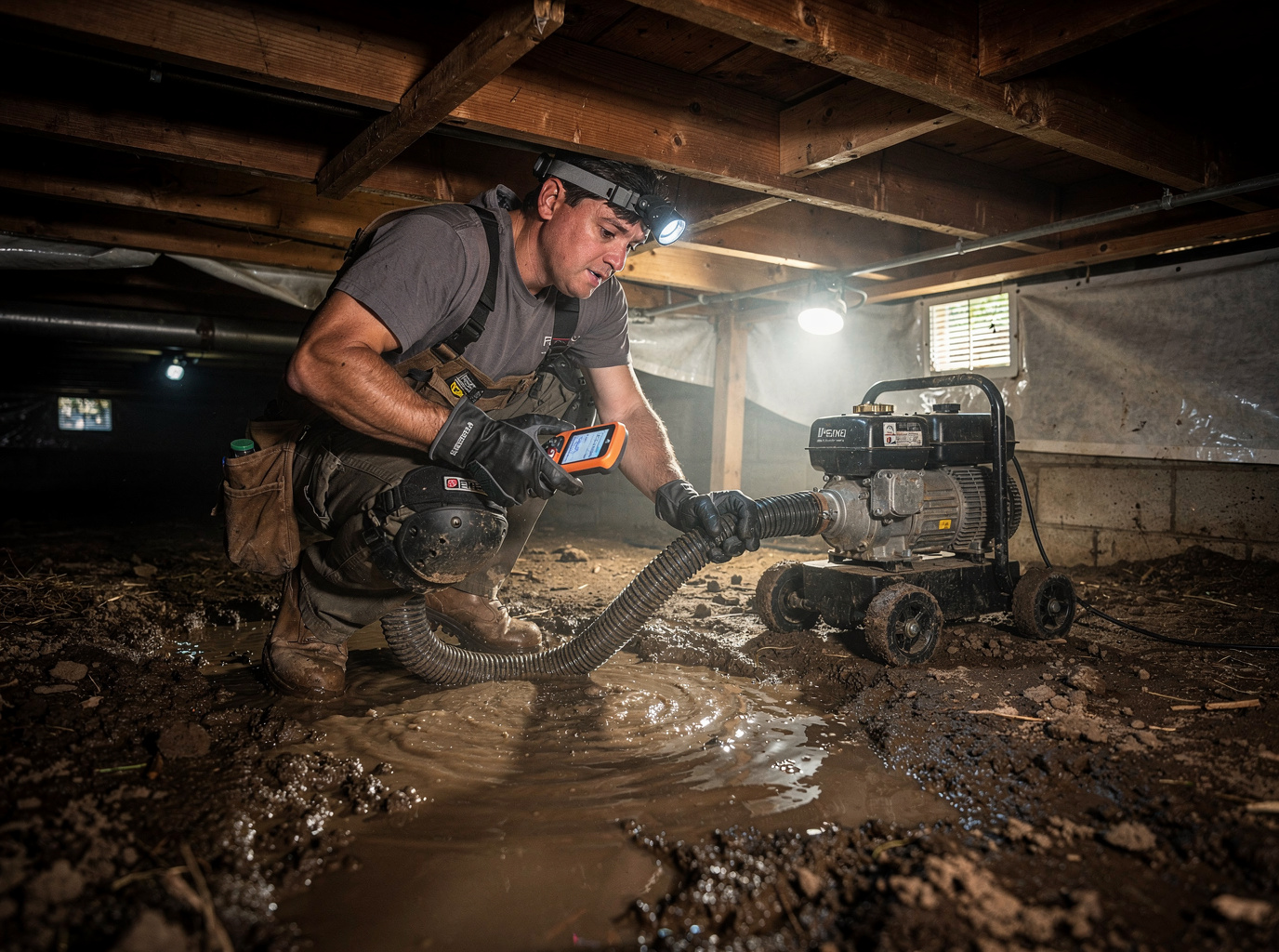
Older homes in Old Decatur and Albany often sit on pier-and-beam foundations with low crawl spaces that collect water quickly during summer thunderstorms common to the humid subtropical climate. Clay soils throughout Morgan County hold moisture against footings and joists long after surface water recedes, raising the risk of mold and structural softening if extraction is delayed. Technicians at 133 4th Ave NE typically begin by mapping low spots near the Tennessee River influence before placing high-volume pumps to avoid disturbing aged wiring or insulation.
Point Mallard and Beltline neighborhoods see frequent groundwater seepage after mild winter rains because the flat terrain offers little natural drainage. Removing standing water here requires careful sediment separation to prevent clogs in discharge hoses routed to street drains. Crews also check for hidden leaks from nearby Decatur Morgan Hospital-area utilities that can keep feeding moisture back into the space.
After primary extraction, drying focuses on airflow under the home rather than just surface fans. In Riverbend properties built on slightly higher ground, technicians often find trapped pockets behind HVAC ducts that standard dehumidifiers miss. Leaving any residual moisture allows humidity to migrate upward into living areas, especially during the long hot summers when indoor-outdoor temperature swings are extreme.
Technician insight
In Decatur, the thing that catches most people out with Crawl Space Water Removal is how the heavy clay soils around the Tennessee River keep feeding moisture back into low pier-and-beam homes in Old Decatur long after the rain stops, especially when grading slopes toward the foundation instead of away from it.
Stormwater in Albany Crawl Space
Heavy summer rain overwhelmed a home's grading in the Albany neighborhood. Water pooled against piers and reached HVAC equipment. Extraction pumps cleared the standing water while crews directed discharge to the street. Targeted drying prevented mold growth on joists before humidity returned.
Crawl Space Water Removal Services We Offer
✓Crawl Space Flood Extraction
High-volume pumping of standing water from crawl spaces after storms or pipe bursts in Decatur homes.
✓Sediment and Debris Removal
Clearing mud, leaves, and construction debris that settle in low crawl spaces around Albany and Old Decatur.
✓Targeted Moisture Extraction
Removing hidden water trapped against joists and piers in older Morgan County homes using specialized wands.
✓Crawl Space Drying Setup
Placement of air movers and dehumidifiers sized for the confined space beneath Decatur residences.
✓Sump Pump Activation and Drainage
Connecting temporary pumps to existing or new discharge lines for ongoing water control near the river.
Crawl Space Water Removal Cost in Decatur, AL
| Service | Typical Range | What Affects It |
|---|---|---|
| Initial Crawl Space Assessment | $125–$225 | Varies with home age and access difficulty in older Decatur neighborhoods. |
| Emergency Water Extraction | $450–$950 | Depends on water depth and volume after heavy rains near the river. |
| Drying Equipment Rental (per day) | $150–$300 | Number of units required for the size of the crawl space. |
| Sediment and Debris Cleanup Add-on | $200–$400 | Common after flooding in low-lying Albany or Riverbend properties. |
Ranges are typical for Decatur, AL and confirmed with an exact written quote before any work starts.
How it works
- 1
Site Assessment
Technician inspects access points, electrical hazards, and water depth in the specific neighborhood crawl space.
- 2
Water Extraction
High-capacity pumps remove bulk water while routing discharge away from neighboring properties in Decatur.
- 3
Drying and Monitoring
Air movers and moisture meters track drying progress until readings reach safe levels for the structure.
- 4
Final Walkthrough
Homeowner reviews cleared space and receives guidance on preventing recurrence based on local soil and terrain.
Pricing
Upfront quotes provided after on-site inspection of access and water volume.